When care can't happen on a screen
Telemedicine can do a great deal — but not everything. A screening, a vaccine, a check-up: some care has to happen in person, with hands, equipment, and a clinician standing in front of you.
For communities hours from the nearest hospital, that means care has to travel. If the people can't come to the clinic, the clinic must come to the people.
The plan: mobile health units
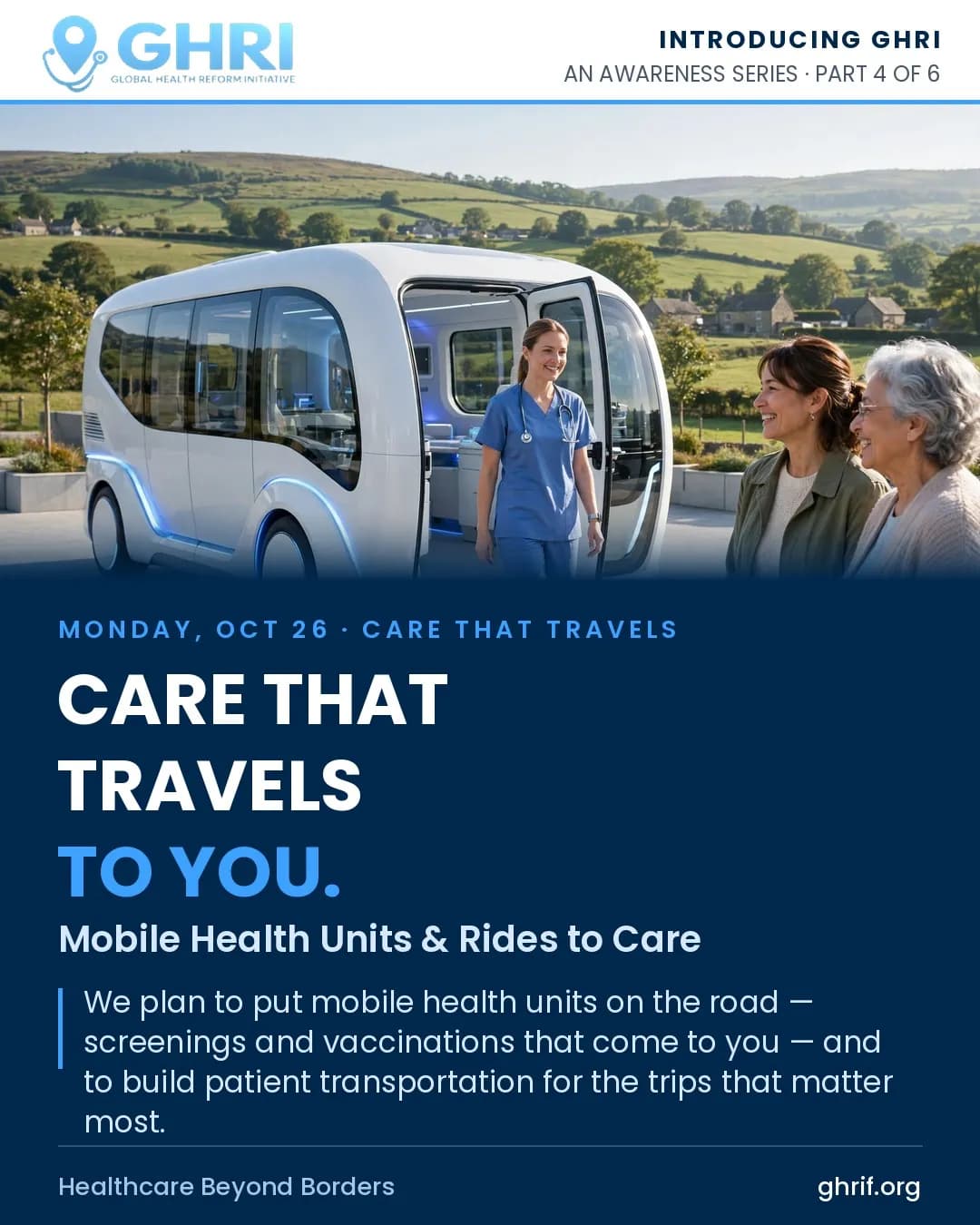
That's why GHRI plans to put mobile health units on the road: screening, immunization, and health education days, brought directly to the towns and villages the system forgets.
A mobile unit turns a parking lot, a schoolyard, or a village square into a point of care for a day — catching conditions early, keeping vaccinations current, and teaching prevention where people actually live.
Getting there: patient transportation
And because a hospital visit only works if you can get there, we plan to build patient transportation too — rides for the appointments that matter most: the specialist referral, the follow-up scan, the treatment that can't come to you.
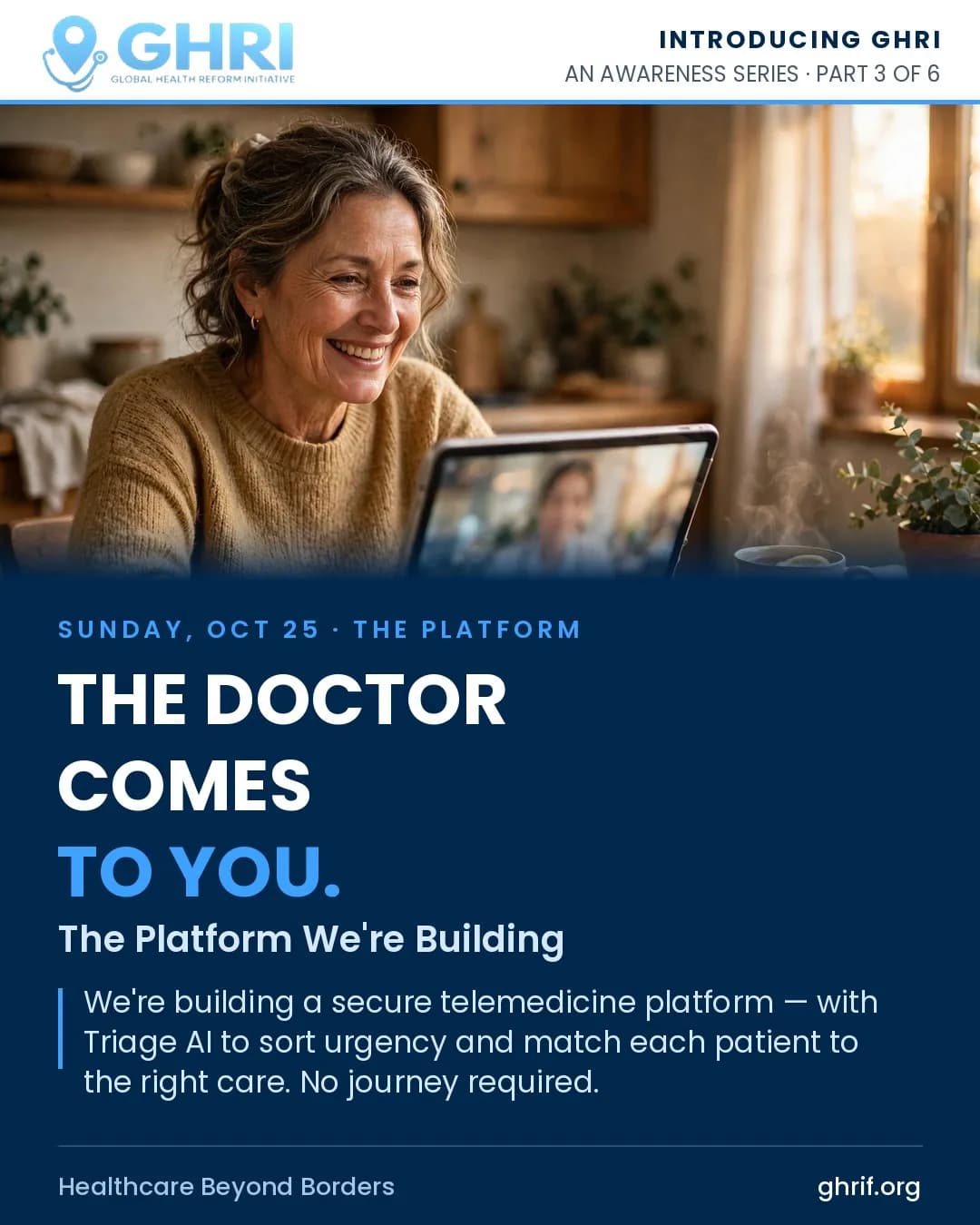
Telemedicine at home, mobile units on the road, and a ride when you need one. Together, that's care that travels to you.
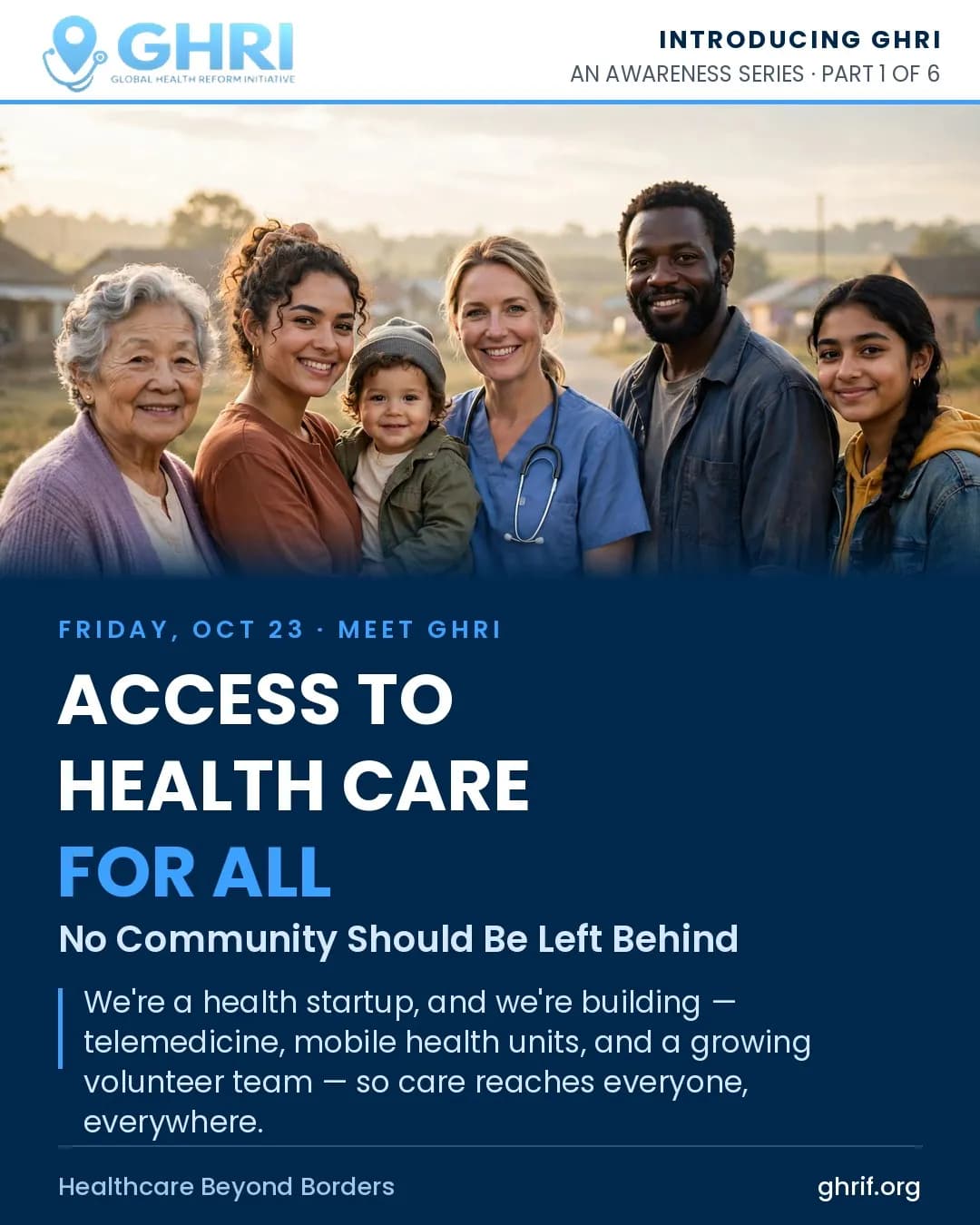
Access to health care for all.
GHRI is building telemedicine, mobile health units, and patient transportation for underserved and rural communities — powered by volunteers. Join us, or support the mission.
The GHRI Team
GHRI
GHRI is building digital infrastructure — including an automated Triage AI system and a secure telemedicine platform — to eliminate administrative barriers, optimize volunteer-led medical care, and expand healthcare access for underserved and rural communities.