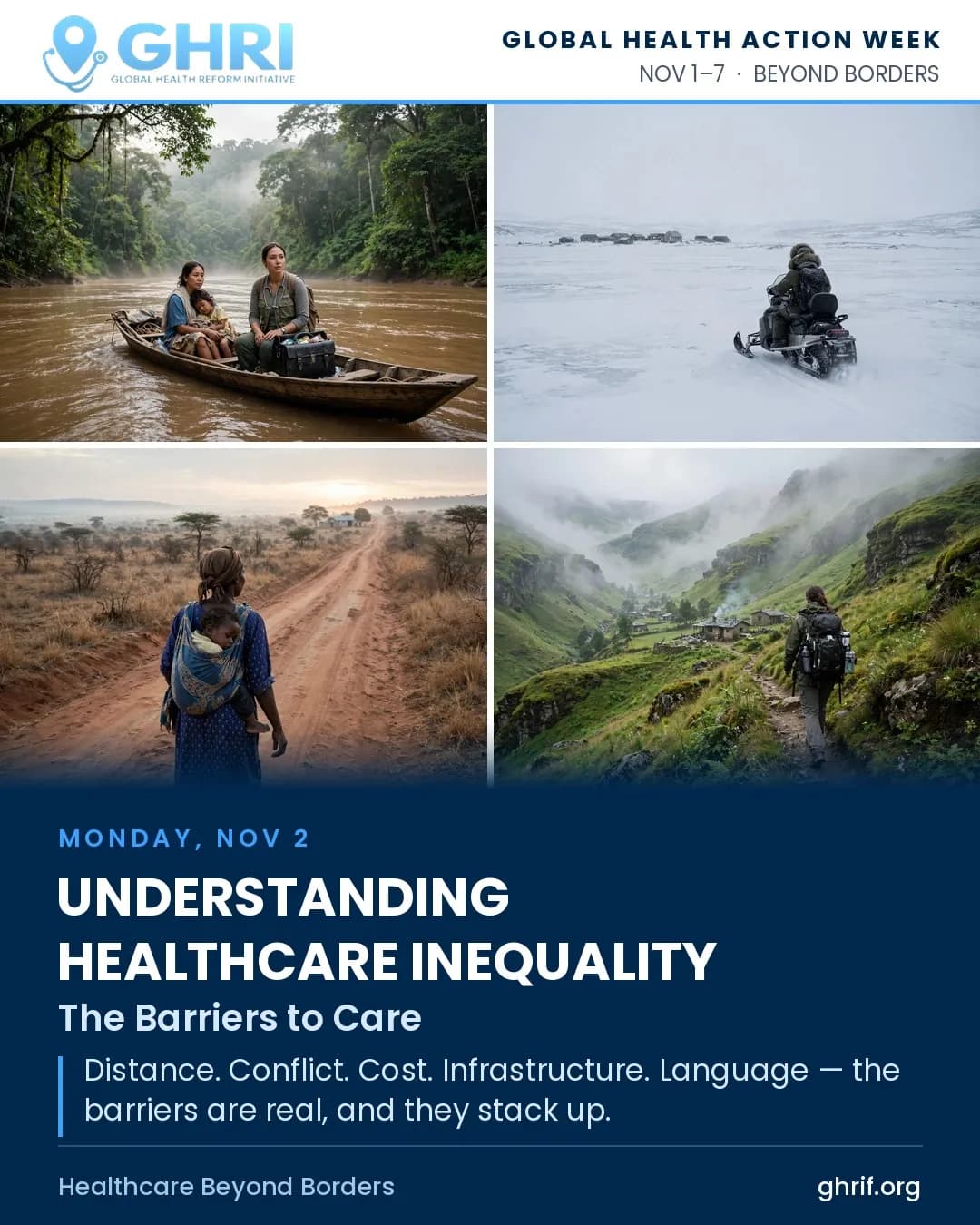
Not one problem — a stack of them
Why can't everyone reach a doctor? It is tempting to look for one answer. There isn't one. Healthcare inequality is barriers stacked on top of each other, and for the communities GHRI spotlights, several usually apply at once.
- Distance — the nearest clinic is hours, even days away
- Conflict — war closes hospitals and drives out health workers
- Cost — care exists, but families can't afford it
- Infrastructure — no roads, no power, no supplies
- Culture and language — care that doesn't speak to the people it serves
How barriers compound
Each barrier makes the others worse. A clinic two hours away is a hardship; a clinic two hours away, down a road that floods, charging fees a family doesn't have, staffed by someone who doesn't speak their language — that's a wall.
This is why single fixes so often disappoint, and why GHRI's approach combines them: telemedicine to shrink distance, mobile units to reach the unreached, transportation to close the last miles, and advocacy to attack the barriers at their roots.
Faces, not just statistics
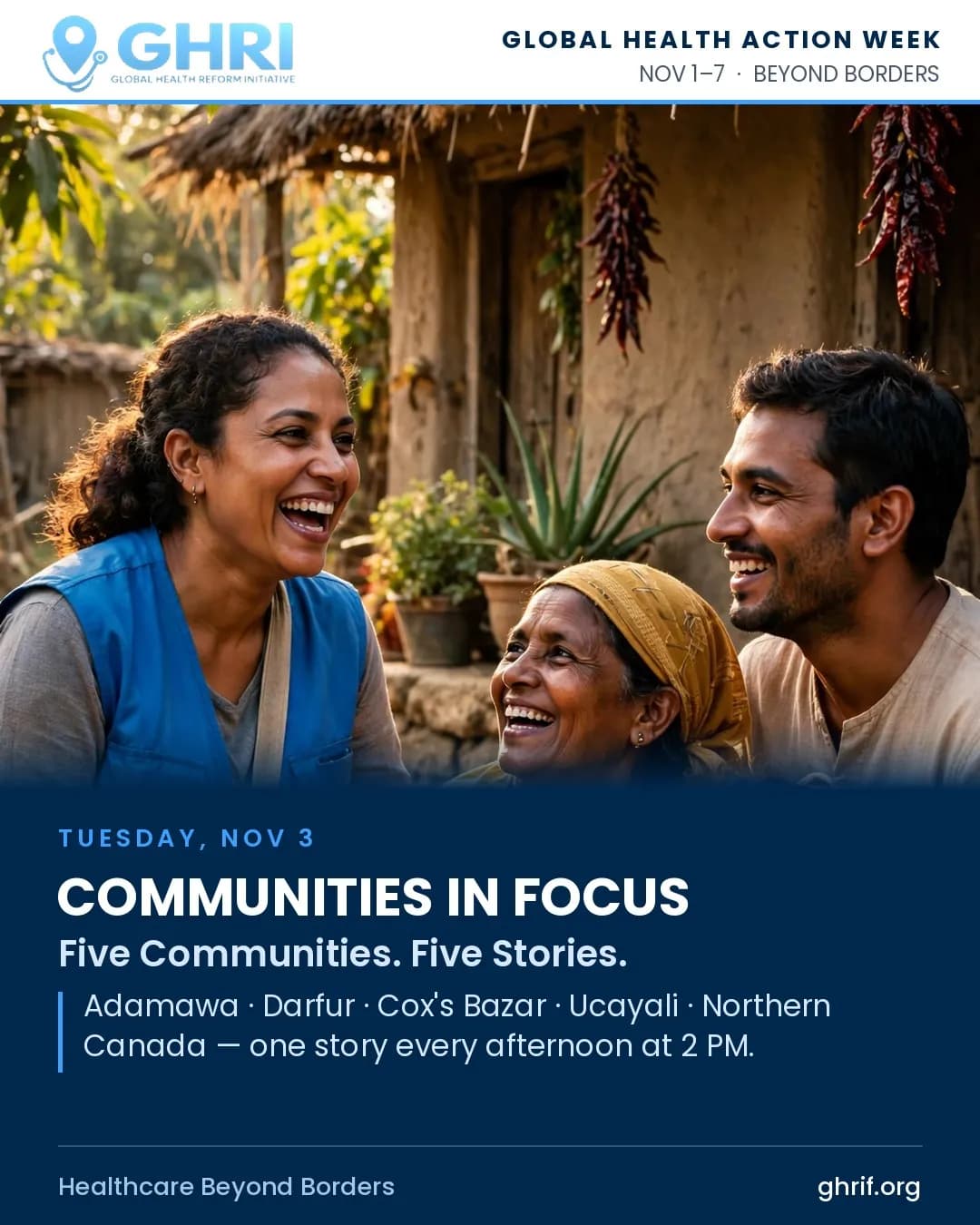
Behind every barrier is a person whose care was delayed, denied, or never attempted. All this week, we're putting faces to those barriers — one community at a time.
Understanding the problem clearly is the first step to solving it. No community should be left behind.
Access to health care for all.
GHRI is building telemedicine, mobile health units, and patient transportation for underserved and rural communities — powered by volunteers. Join us, or support the mission.
The GHRI Team
GHRI
GHRI is building digital infrastructure — including an automated Triage AI system and a secure telemedicine platform — to eliminate administrative barriers, optimize volunteer-led medical care, and expand healthcare access for underserved and rural communities.