The barrier: distance
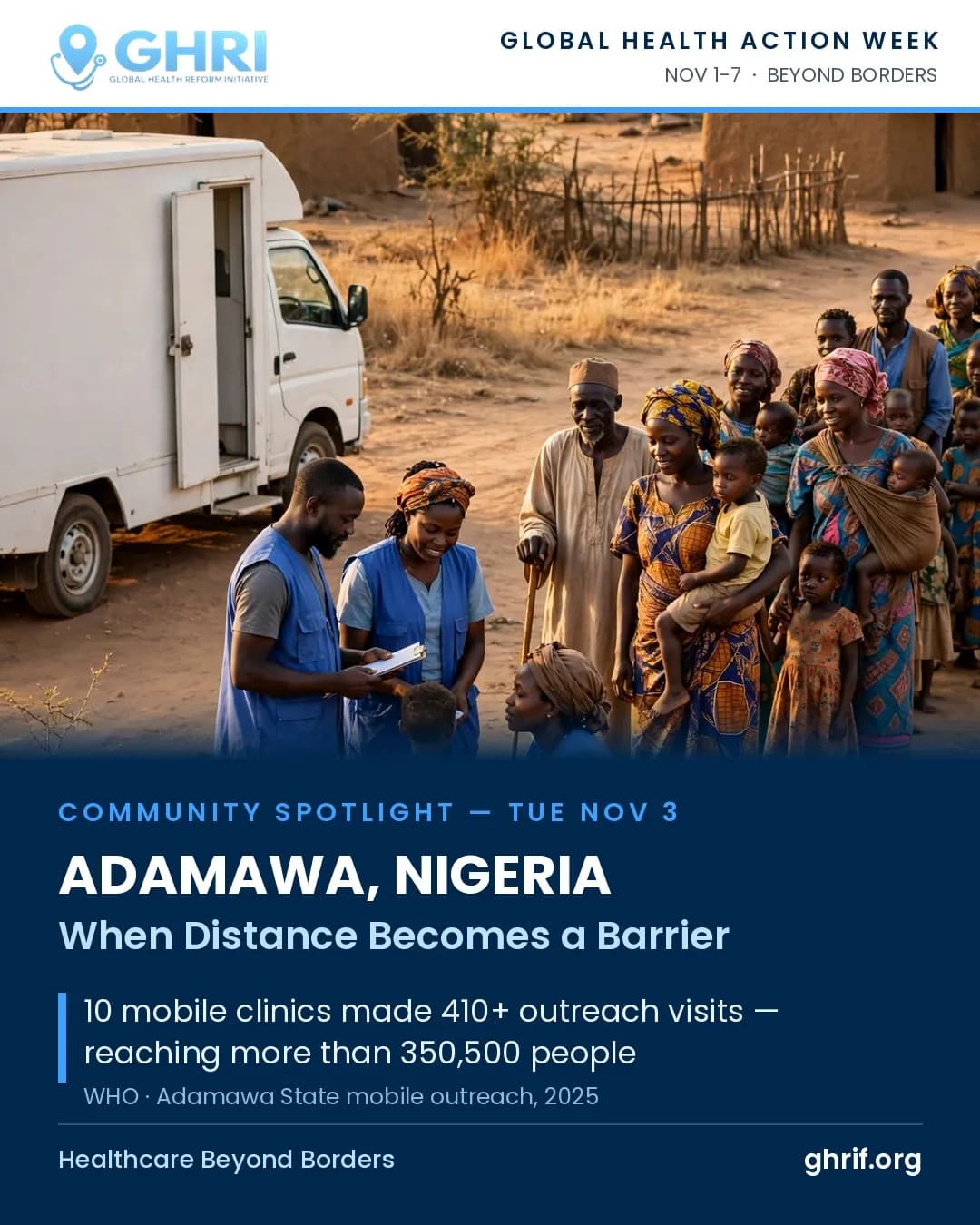
In northeastern Nigeria, distance, insecurity, and seasonal flooding have long kept fixed health clinics out of reach for remote communities. When the road is long, the weather against you, and the clinic far away, care becomes something that happens to other people.
For families in Adamawa's remote villages, a treatable condition could go untreated for years — not because treatment doesn't exist, but because it never came within reach.
Change arrives on wheels
But change is arriving on wheels: 10 mobile clinics, supported by WHO, made over 410 outreach visits across 10 local government areas between September and December 2025 — reaching more than 350,500 people.
For 22-year-old Musa Ali of Mafiya village, one visit changed everything: diagnosed with epilepsy after years of untreated seizures, he began treatment within weeks — and his recovery encouraged neighbours to seek care too.
Why we're spotlighting Adamawa
Adamawa proves the principle at the heart of GHRI's own plans: when patients can't reach care, care must reach patients. Healthcare should not depend on how easily someone can reach a hospital.
GHRI is highlighting this community to raise awareness. We don't serve Adamawa — the local teams and partners doing this work do, and their results deserve to be seen.
Statistics: WHO reporting on mobile clinic outreach in Adamawa State (February 2026).
Access to health care for all.
GHRI is building telemedicine, mobile health units, and patient transportation for underserved and rural communities — powered by volunteers. Join us, or support the mission.
The GHRI Team
GHRI
GHRI is building digital infrastructure — including an automated Triage AI system and a secure telemedicine platform — to eliminate administrative barriers, optimize volunteer-led medical care, and expand healthcare access for underserved and rural communities.