A system under attack
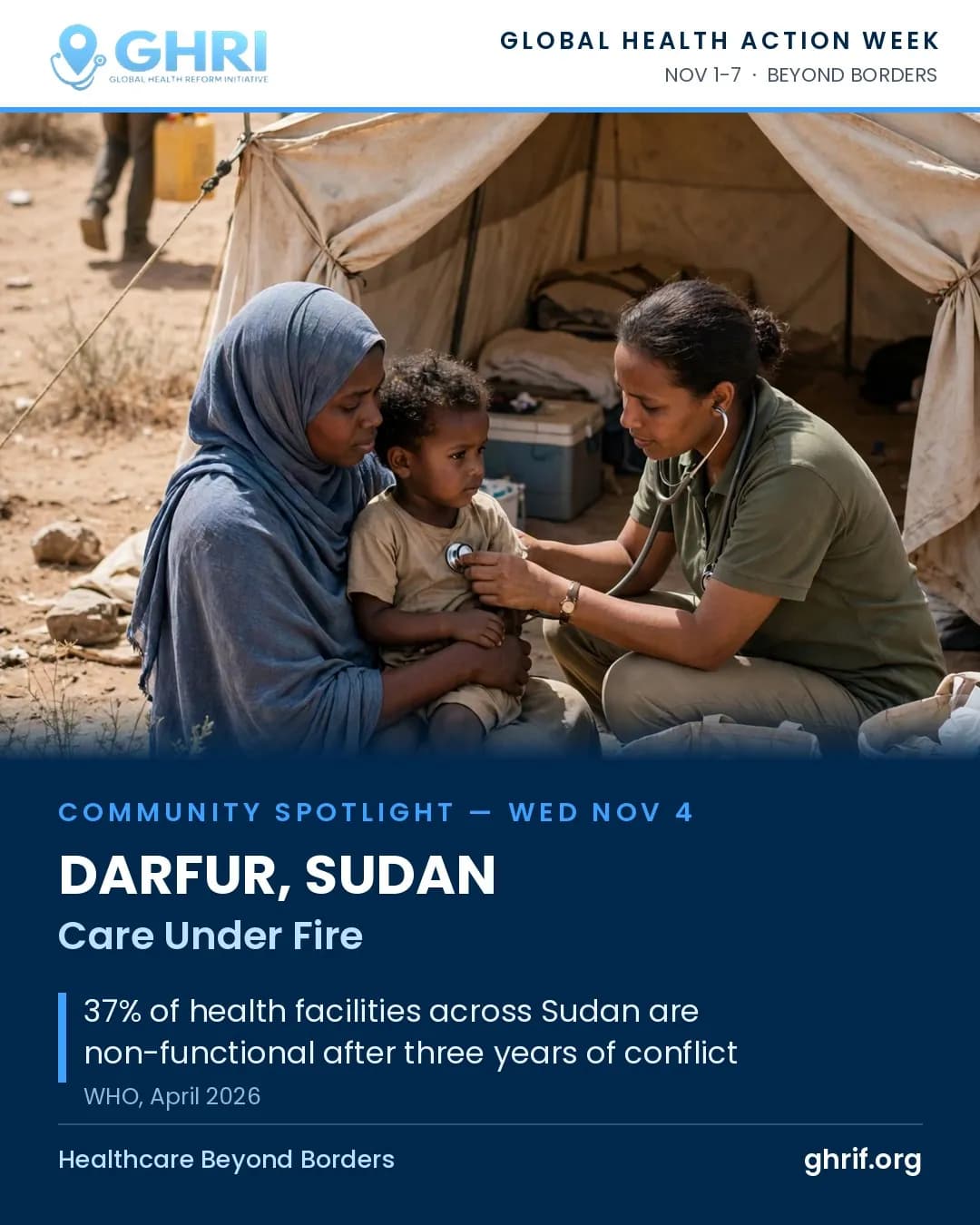
Across Sudan, 37% of health facilities are non-functional after three years of conflict. Darfur — hosting 65% of Sudan's 8.6 million displaced people — is among the hardest hit.
In Tawila alone, over 700,000 displaced people face severe gaps in health, nutrition, and water services. When war closes a hospital, it doesn't just close a building: it closes the only door to care for everyone around it.
Care continues
Yet care continues. Health workers keep serving despite insecurity and shortages, and Médecins Sans Frontières runs the only 200-bed hospital serving around 600,000 displaced people in Tawila.
Their persistence is a reminder that healthcare access is protected — or lost — by people: the workers who stay, the organizations that support them, and the world that chooses whether to look or look away.
Why we're spotlighting Darfur
No one should lose access to a doctor because of war. GHRI is highlighting Darfur to raise awareness of what conflict does to healthcare — and of the people holding the line.
Awareness is the first step toward the pressure, funding, and protection that health workers in conflict zones urgently need.
Statistics: WHO reporting on health facilities and displacement in Sudan (April 2026).
Access to health care for all.
GHRI is building telemedicine, mobile health units, and patient transportation for underserved and rural communities — powered by volunteers. Join us, or support the mission.
The GHRI Team
GHRI
GHRI is building digital infrastructure — including an automated Triage AI system and a secure telemedicine platform — to eliminate administrative barriers, optimize volunteer-led medical care, and expand healthcare access for underserved and rural communities.