Isolation — and a system that didn't listen
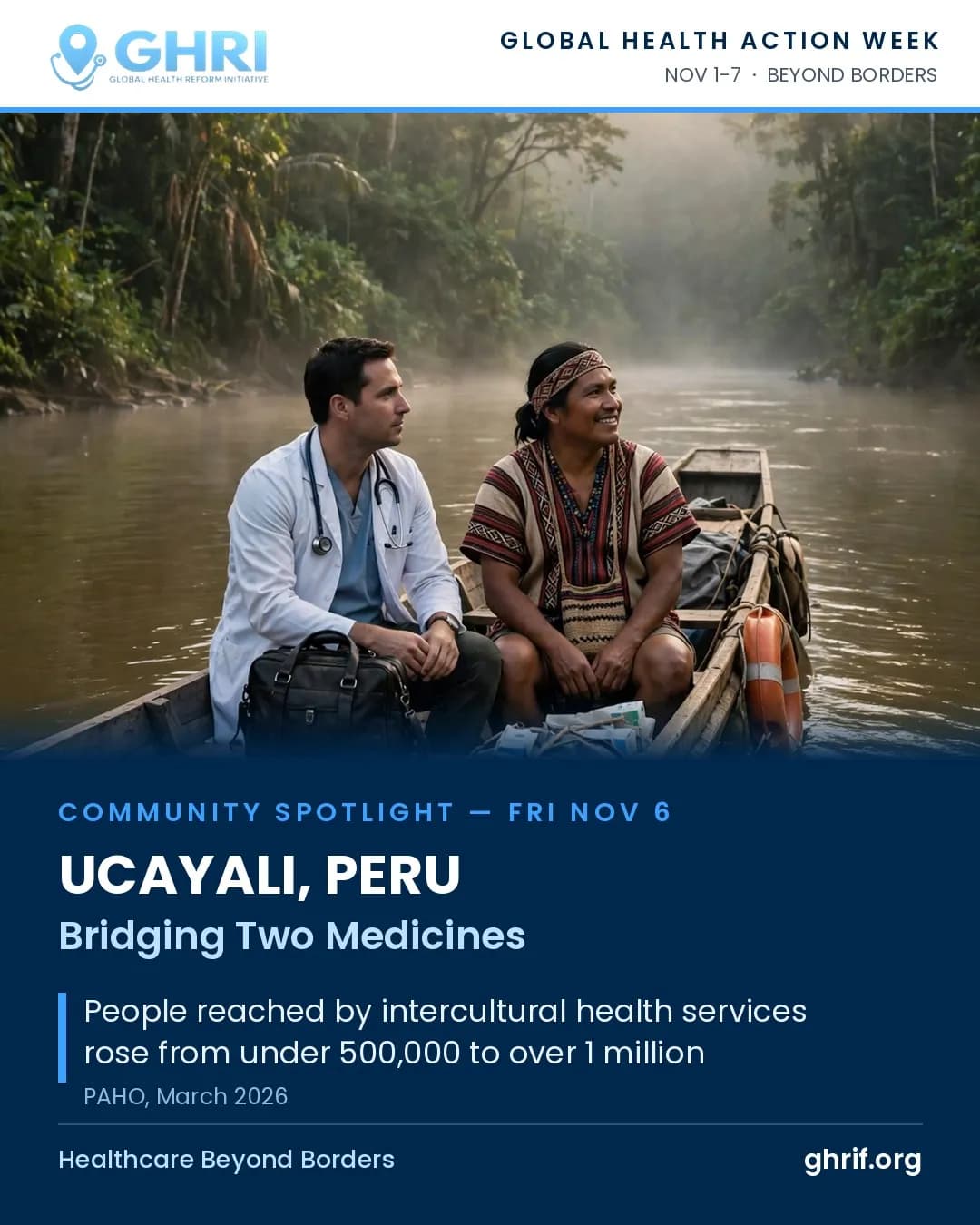
In Peru's Amazon region, rivers are roads — and when water levels drop, even those disappear. For Indigenous communities, geographic isolation has long combined with a health system that didn't speak their languages or respect their customs.
Care that arrives without language or respect often doesn't arrive at all: people avoid it, delay it, or turn first — sometimes only — to the traditional medicine they trust.
The bridge is human
The bridge is human. Each month, intercultural health brigades travel rivers and roads to reach remote villages — 45 volunteer liaisons across Peru, speaking first in their own languages. People reached by intercultural health services rose from under 500,000 in 2022 to over one million in 2024.
At Atalaya Hospital — serving 60,000 people from five Indigenous groups — monthly births nearly doubled, and no maternal deaths have been recorded since it opened.
Why we're spotlighting Ucayali
Ucayali teaches a lesson GHRI carries into everything we build: respect is a form of medicine too. Care designed with a community — in its language, honoring its traditions — reaches people that a technically perfect system never would.
GHRI is highlighting this community to raise awareness of a model the world can learn from.
Statistics: PAHO reporting on intercultural health services in Peru (March 2026).
Access to health care for all.
GHRI is building telemedicine, mobile health units, and patient transportation for underserved and rural communities — powered by volunteers. Join us, or support the mission.
The GHRI Team
GHRI
GHRI is building digital infrastructure — including an automated Triage AI system and a secure telemedicine platform — to eliminate administrative barriers, optimize volunteer-led medical care, and expand healthcare access for underserved and rural communities.