The tyranny of distance
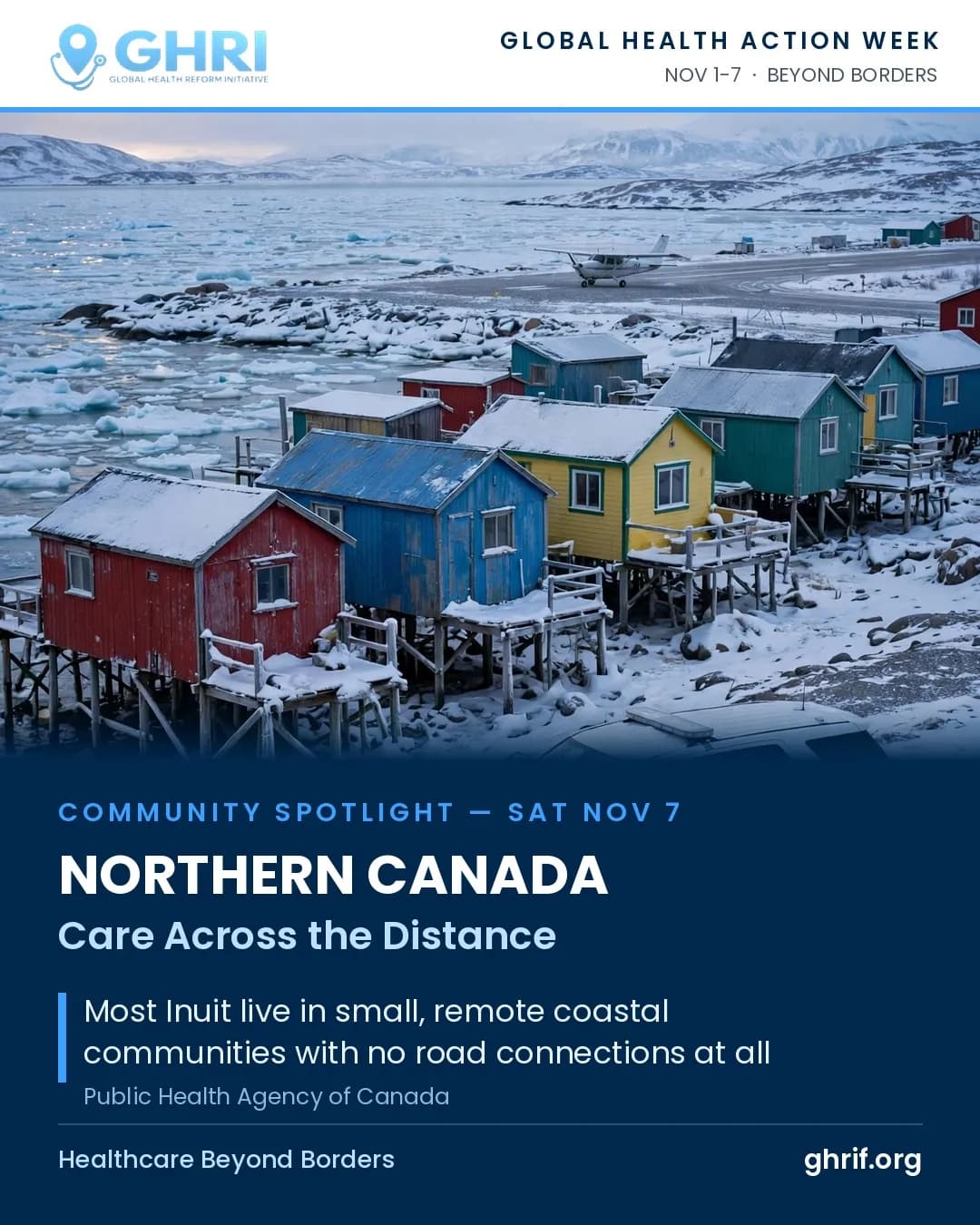
Healthcare inequality isn't only a story of poorer countries. In Canada's Arctic, most Inuit live in small, remote coastal communities with no road connections at all — what public-health researchers call the 'tyranny of distance.' Specialized care can mean medical evacuation by plane, thousands of kilometres from home.
Canada's own public-health reviews confirm that Inuit patients in remote regions struggle to access care, with little of it delivered in culturally appropriate ways.
Answers from the ground up
Responses are growing from the ground up: community paramedics trained closer to home, remote-presence technology bringing physicians in from a distance, and healing models rooted in Indigenous values and connection to the land.
Each response attacks the same problem from a different angle — bring the skills closer, bring the doctor in virtually, and make care feel like it belongs to the community it serves.
Why we're spotlighting Northern Canada
Distance should never decide who gets care — in the Arctic or anywhere else. Northern Canada shows that the access crisis lives in wealthy countries too, and that its solutions anywhere carry lessons for everywhere.
GHRI is highlighting this community to raise awareness — the first step toward change.
Based on Canadian public-health reviews of Inuit healthcare access in remote and Arctic regions.
Access to health care for all.
GHRI is building telemedicine, mobile health units, and patient transportation for underserved and rural communities — powered by volunteers. Join us, or support the mission.
The GHRI Team
GHRI
GHRI is building digital infrastructure — including an automated Triage AI system and a secure telemedicine platform — to eliminate administrative barriers, optimize volunteer-led medical care, and expand healthcare access for underserved and rural communities.