The answers taking shape
It would be easy to leave this week discouraged. Don't. Around the world — including in the very communities we're spotlighting — people are proving what works:
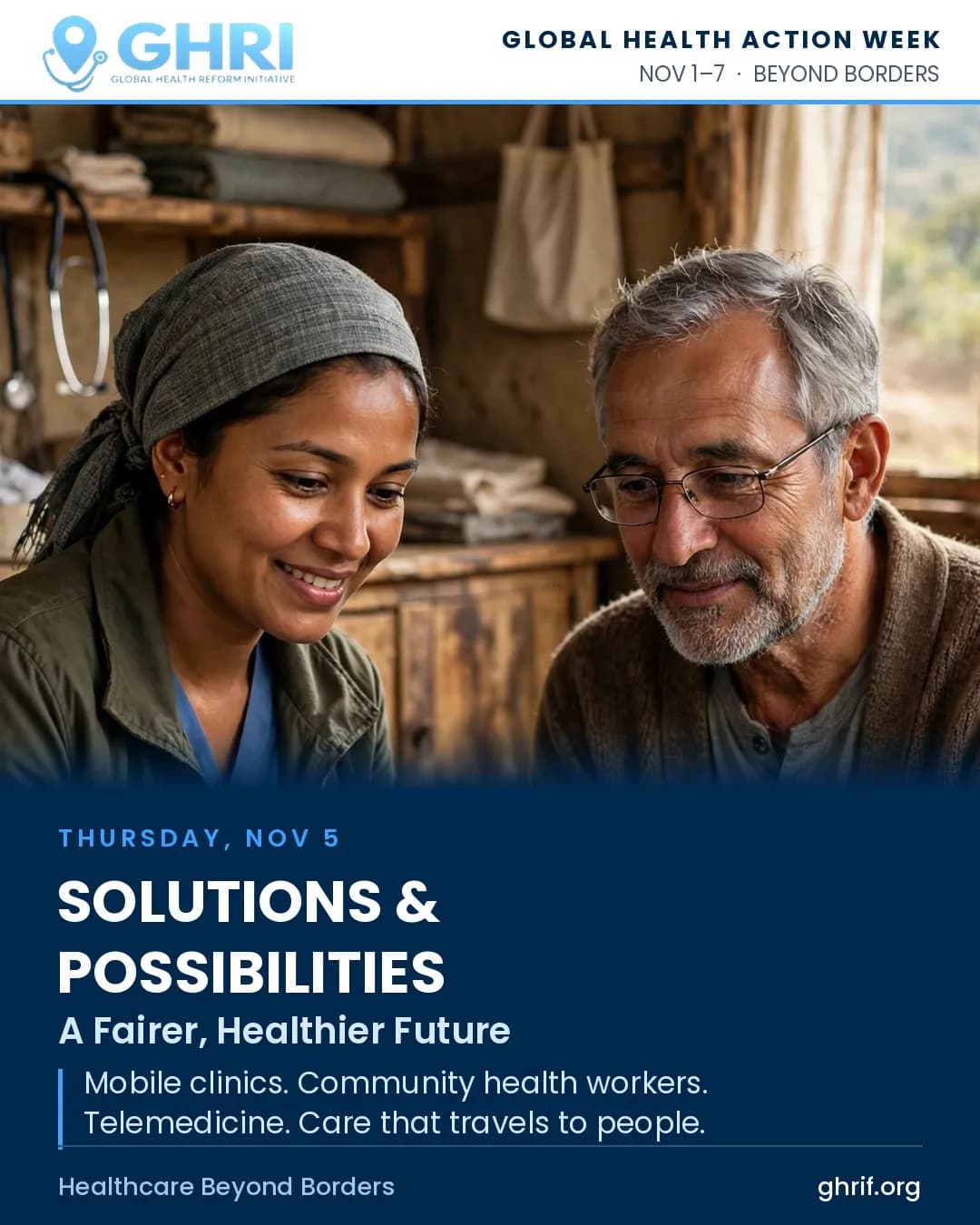
- Mobile clinics that bring care to the village
- Community health workers trained where they're needed most
- Telemedicine bringing doctors across vast distances
- Intercultural care that respects local languages and traditions
- Partnerships between governments, NGOs, and communities
Proven, not theoretical
None of these are theories. Every one is already saving lives in real communities: mobile clinics making hundreds of outreach visits in northeastern Nigeria, intercultural brigades reaching a million people in the Peruvian Amazon, remote-presence technology connecting Arctic patients to physicians thousands of kilometres away.
The pattern is consistent: care works when it travels to people, speaks their language, and is built with the community — not just delivered to it.
GHRI's part in it
These are the same solutions GHRI is building toward: a telemedicine platform, mobile health units, patient transportation, and a volunteer movement to power them — starting in rural America and learning from the best examples worldwide.
Care should travel to people. It already does, wherever someone decides to make it happen.
Access to health care for all.
GHRI is building telemedicine, mobile health units, and patient transportation for underserved and rural communities — powered by volunteers. Join us, or support the mission.
The GHRI Team
GHRI
GHRI is building digital infrastructure — including an automated Triage AI system and a secure telemedicine platform — to eliminate administrative barriers, optimize volunteer-led medical care, and expand healthcare access for underserved and rural communities.